
Warning Signs Of Tire Failure
It’s no secret that driving on worn or damaged tires can greatly increase the risk of tire failure. The good news is that these issues can often be easily avoided when knowing the signs. At Faulkner Automotive Group, our service team is committed to helping drivers around Harrisburg, Mechanicsburg, and Trevose, PA, stay safer on the road. That’s why we created this guide illustrating a few key warning signs of tire failure.
Some of the most common signs are included below.
Cracks, Bulges, or Blistering
If you live in a region that experiences regular changes in temperature, this can result in your tires wearing down and drying out more quickly than normal. Excessive rubbing or traveling over rough roads also can play a factor.
It’s especially important to regularly check your tires for cracks or bulges in the sidewall if you live somewhere hot or if you store your vehicle for long periods of time without driving it. This can lead to dry rot, which may cause a tire blowout or other tire failure. If you notice any spider web cracking or blisters starting to form along the tires’ sidewall, immediately schedule a service appointment to have it replaced.
Low Tire Pressure
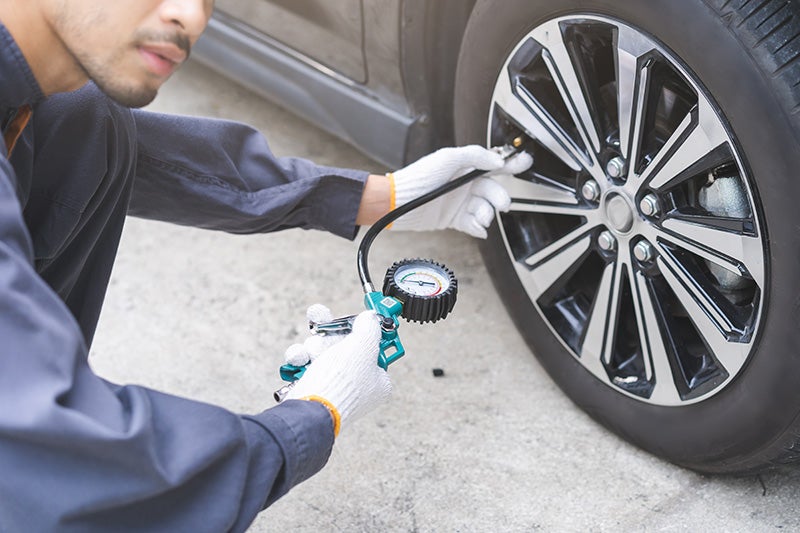
Your Tire Pressure Monitoring System or “TPMS” light looks like an exclamation point enclosed within a horseshoe and appears whenever your tire’s air pressure dips below a safe level. If you see this light, check your tire pressure and fill your tires with air as soon as possible. You can put air in your tires at a service center or gas station, or with a device designed for home use. Fill them up to the recommended PSI, which you can find in your owner’s manual. It’s also often written on a sticker inside your driver’s-side door. If the TPMS light doesn’t go away after a few miles of driving, it’s a sign that at least one of your tires has a slow leak that needs to be fixed or replaced.
Strange Vibrations
While it’s normal to experience a small amount of vibration, especially when traveling over a rough roadway, excessive bouncing or vibrating shouldn’t be ignored. If you notice this sensation when coming to a full stop, it could be the result of poor tread depth or an issue within the tire. If you notice your vehicle pulls to one side or takes longer to come to a full stop, it might also be a sign that your wheels are unbalanced and need to be realigned. This can easily be performed by a certified technician who will also check for any signs of excessive wear.
Low Tread Depth
Your tire’s treads are what make actual contact with the road and provide the proper grip needed to effectively maneuver and brake. Healthy treads on a typical passenger vehicle measure above 4/32nds of an inch. Shallow treads place an increased burden on your vehicle’s internal system causing expensive engine or brake parts to prematurely wear down. It can also lead to a lack of traction control and hydroplaning, so you’ll want to check your treads often.
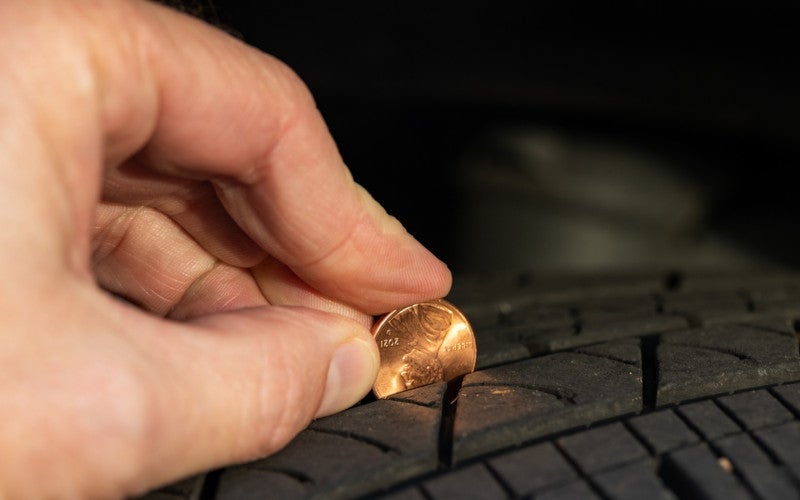
The Penny Test: A simple way you can check your vehicle’s treads is by placing a standard penny into the tread groove with the top of Lincoln’s head facing into the tire. If all or most of his head is obscured, then your tread depths are in good condition. On the other hand, if his head is fully visible, it means your tires are bald and are too dangerous to use. This may result in tire failure. Immediately schedule a full or partial tire replacement and avoid driving until they can be inspected by a certified technician.
Old Tires
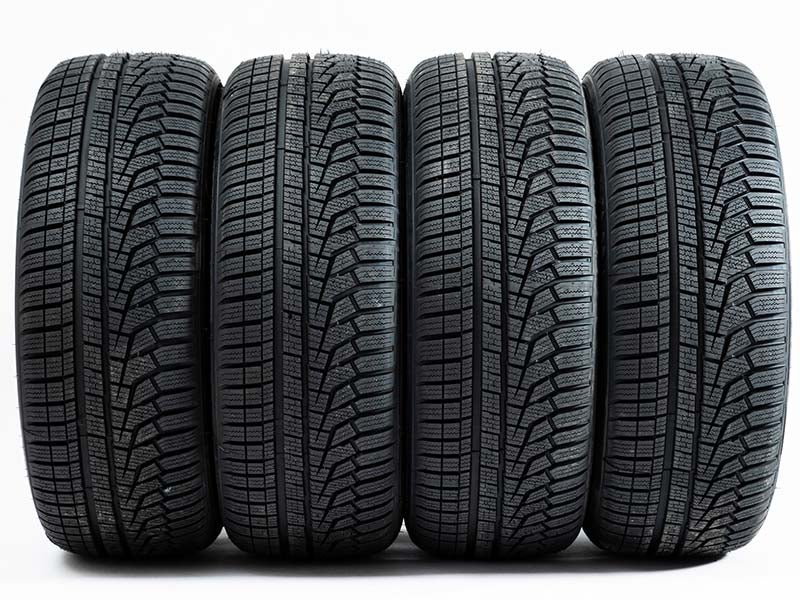
Of course, it’s important to note that your tires aren’t meant to last forever. Sometimes tires fail just because they’ve been around the block a few too many times. In general, sturdy, well-built tires have a lifespan of around 60,000 miles. That’s roughly four years for the average driver. So, if you haven’t replaced your tires in a while, it may be worth visiting the tire center at your local dealership to have your tires checked out. The technicians will be able to let you know if you’re due for a new set of tires.
How to Prevent Tire Failure
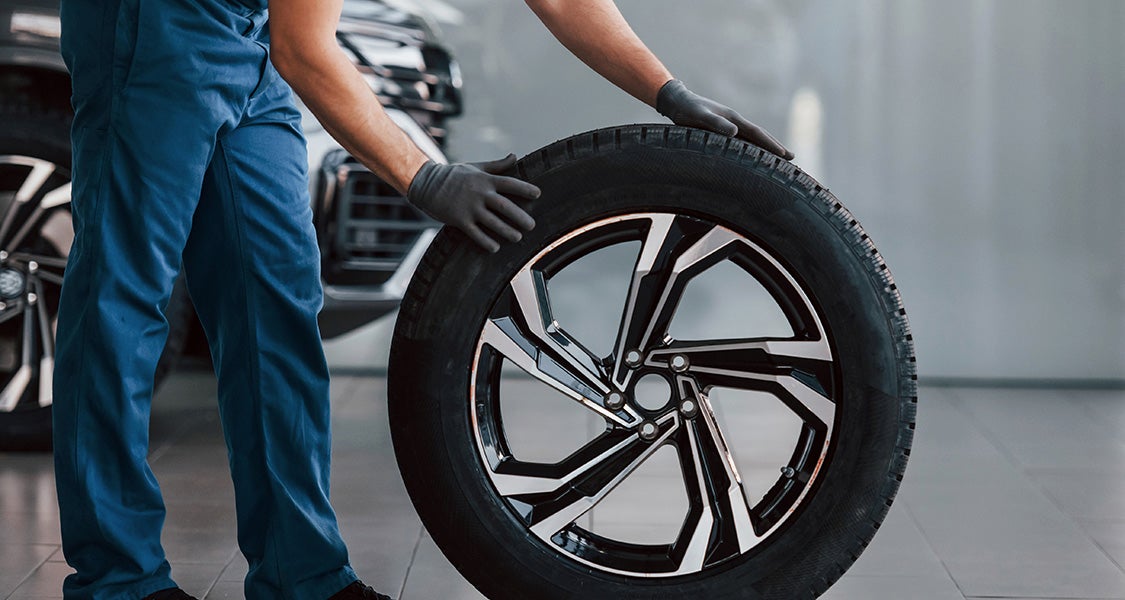
Preventing tire failure is largely about routine maintenance. While it’s not guaranteed to protect you from any unexpected mishaps, checking on and caring for your tires regularly can help you spot several issues before they become problems.
Here are few things we recommend doing to prevent tire failure:
Check your tires monthly
It’s generally a good practice to check your tires at least monthly. At this time, observe the sidewall for any cracks or bulges and test your tire pressure. If your tire pressure reads below the recommended PSI, fill it up at this time. We also recommend checking for any nails or holes in your tire because these will need to be repaired at your local service center.
Balance and align your wheels
The weight in most tires is not balanced evenly. That’s totally normal. A mechanic can easily fix this by adding weights where necessary or finding the best alignment with the weight distribution of your car. This can shift over time, so you’ll want to schedule tire balance and alignment services at regular intervals.
Rotate your tires
It’s normal for your tires to wear down over time. However, depending on how you drive or what kind of drivetrain your car has, your tires won’t all wear down evenly. For example, front-wheel drive vehicles will wear out the front tires sooner than the back, the reverse is true for rear-wheel drive vehicles. So, we switch them every now and then to ensure even wear. This is good for preventing tire failure and for protecting your suspension. To make it easy, have your tires rotated with every oil change.
Schedule a Service Appointment Today!
If your vehicle shows any of the warning signs we listed, simply stop by or go online to schedule an appointment today. At Faulkner Automotive Group, our friendly and highly skilled technicians provide quality service to drivers throughout Harrisburg, Mechanicsburg, and Trevose, Pennsylvania. Contact us to schedule service today!